
Update on plastic 'nurdle' pellets
Beaches are open as the plastic pellet clean-up continues - you can read more here about what happened, what is happening and advice about continuing to enjoy our coastline.
Current position
- What has happened?
Plastic pellets, also known as nurdles, have been reported on parts of the North East coastline following a vessel collision in the River Tyne on Sunday 19 July 2026. The City Council is responding to reports of pellets washing up on sections of the city's coastline and is working with partners to assess the extent of contamination and support clean-up activity where appropriate.
The Port of Tyne has issued a statement relating to the initial incident. You can read this here: Port of Tyne Update: Plastic Pellet Spill Response | Port of Tyne.
- What are nurdles?
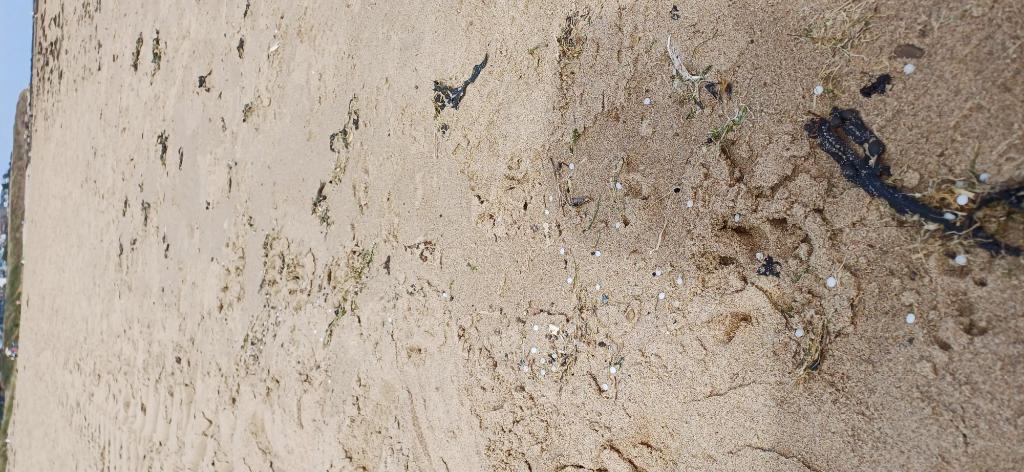
Nurdles are tiny plastic pellets, usually around 1-5mm in size, used as raw material to manufacture plastic products such as packaging, bottles and containers.
- Where have nurdles been found?
Nurdles have been reported on sections of the North East coastline. They have washed up across the shoreline, mainly near the Tyne in South and North Shields and smaller amounts at Seaburn and Roker.
Are more pellets expected to wash up?
Nurdles can move with tides, wind and currents. They may continue to move with the tide and may come ashore over more than one tide cycle.
- How much material has been released?
The exact quantity of nurdles released into the environment is still being assessed by the relevant agencies. Partners are working to understand how much material was involved, how much remains contained, and how much has been recovered.
Clean-up operation
- What is the City Council doing?
Council teams are monitoring affected locations, supporting a coordinated clean-up operation with partner organisations, and working with the Environment Agency, Maritime and Coastguard Agency, Port of Tyne, neighbouring local authorities, the Mayoral Strategic Authority, specialist contractors and other agencies to assess the extent of contamination and support removal where appropriate.
- How is the clean-up being carried out?
Clean-up activity is being coordinated around tidal conditions, with planned work ongoing.
- Why is it taking time?
The nurdle clean-up is manual and time-consuming, involving methods such as rakes, brushes, sieves and bags. Bigger clean-ups are underway closer the Tyne where larger amounts have come ashore. Nurdles are very small and can spread with tide, wind and currents. Nurdles can float, wash up on the beach and sink to the seabed. They may be mixed with sand, stones, seaweed or other beach material.
- What happens to the nurdles once collected?
Collected material needs to be stored, classified and disposed of appropriately.
Public help and volunteering
- Can members of the public pick nurdles up?
For now, we are asking people not to undertake clean-up activities alone and to wait for organised guidance. The council is grateful for offers of support but is asking people not to carry out clean-up activities alone while the response is being coordinated.
- Why can't people just collect them themselves?
There are three main reasons: safety, coordination and data. The council needs to make sure people follow safety precautions, avoid creating additional issues, and ensure collected material is weighed and recorded so the environmental impact can be understood.
- Will there be volunteer clean-up sessions?
The council is looking at ways to organise volunteer clean-up sessions and will share more information when guidance is available.
- What should I do if I see nurdles?
If you see nurdles please report the sighting and include the location, approximate amount seen, a photograph where possible, and the date and time observed. You can report Sunderland sightings here: Beach - plastic pellets - Sunderland City Council
Information on how to report nurdles across other local authorities can be found on their websites.
People can also help the clean-up operation by avoiding stepping on nurdles or pushing them deeper into the beach's surface.
- Can I continue to visit the coastline and beaches?
Yes, of course! The coastline continues to be open for business and leisure. There are lots of exciting activities taking place across our beautiful seafronts and beaches.
If you are out and about enjoying our fantastic coastline please be mindful of the important clean-up operation which is currently taking place. Please keep a distance to let our hardworking teams continue this important work.
Public Health/ Health and Safety
- Are nurdles dangerous to people?
The public health risk on shore is considered to be very low. The plastic pellets are not toxic, but people are advised not to handle them.
- Why are people being told not to handle the nurdles?
People are being advised not to handle the pellets as a precaution and to support a safe, coordinated clean-up. If you do inadvertently touch any nurdles, just as with any other items of debris you might touch on the beach, the UK Health Security Agency (UKHSA) advise people to follow usual handwashing guidance.
- Are the nurdles toxic?
The public health risks on shore are very low and the plastic pellets are not toxic, but they can pose a risk to wildlife and other animals if ingested.
- What should dog owners do?
Dogs should be kept on leads in affected areas and owners should prevent pets from eating or playing with pellets.
- What if my dog eats nurdles?
Pellets can pose a risk to wildlife and other animals if ingested. If a dog or other pet eats pellets and you are concerned, contact a vet for advice.
Bathing
- Is it safe to swim?
People should check the latest Environment Agency bathing water advice before entering the water.
- Where should people check before swimming?
People should check the Environment Agency's bathing water quality information before visiting a beach or entering the water. UKHSA's wild swimming guidance advises people to check water quality through Swimfo before heading to a beach, lake or river, and the Environment Agency's Swimfo service shows water quality information for designated bathing waters.
- What general open water swimming advice should people follow?
UK Health Security Agency (UKHSA) advises people to observe local safety signs, avoid swallowing water or splashing it into the mouth where possible, cover cuts and scratches with a waterproof plaster, wash hands after swimming and seek medical help if they become ill after swimming.
- Who decides whether there is advice against bathing?
The Environment Agency is responsible for bathing water quality information and advice on designated bathing waters.
Wildlife and environment
- What impact can nurdles have on wildlife?
Nurdles can pose a risk to wildlife and other animals if they are ingested.
- Why are nurdles a problem if they are not toxic?
Nurdles are small, persistent plastic pellets and can spread through the marine environment. They can be harmful to wildlife if mistaken for food and eaten by birds, fish or other marine animals, and they can be carried by wind and sea across beaches and coastal habitats.
- What about protected wildlife sites?
Partners are considering environmental sensitivities, including SSSIs and other designated sites, as part of the response.
- Should members of the public report injured wildlife?
Yes. If you find injured or distressed wildlife, please do not handle it. Contact an appropriate wildlife rescue organisation for advice. You can find information on reporting an injured animal here Report a dead or injured animal - GOV.UK.
Responsibility, costs and investigation
- Who is leading the response?
This is a multi-agency response involving:
- Local authorities across our region, including the City Council.
- the Mayoral Strategic Authority
- the Environment Agency
- Maritime and Coastguard Agency
- Port of Tyne
- Specialist contractors
- National Trust
- Other agencies.
- Who is responsible for the incident?
The cause and circumstances of the vessel collision are subject to ongoing investigations.
Other
- How will people know when an area has been cleaned?
The council will continue to provide updates as work progresses and more information becomes available. It is anticipated that the clean-up will take a considerable amount of time with repeated cleaning activity as the nurdles move with the tide.
- Why are there still nurdles after clean-up teams have been out?
More pellets may wash ashore with tides, and multiple clean-ups may be required. There will be a need for ongoing clean-up rather than a single one-off removal
- Are beaches closed?
No, our beaches remain open at this time.
- Can people still walk on the beach?
Yes. People visiting the coast should avoid handling any pellets, keep dogs on leads in affected areas, follow any on-site signage, and avoid areas where clean-up activity is taking place. People can also help the clean-up operation by avoiding stepping on nurdles or pushing them deeper into the beach's surface.
- Are beaches being checked regularly?
Yes. Council teams are monitoring affected locations and supporting a coordinated clean-up operation.
Where can people check bathing water quality?
GOV.UK has a bathing waters collection from Defra and the Environment Agency, including information on bathing water quality, classifications and local authority signage rules. GOV.UK: Bathing waters [gov.uk]
- Where can people find general open water swimming health advice?
UKHSA has guidance on staying healthy while wild swimming, including checking water quality, observing local safety signs, avoiding swallowing water and washing hands after swimming. See: UKHSA: How to stay healthy while wild swimming [ukhsa.blog.gov.uk]
- Where can people find more about nurdles?
Nurdle UK provides information about microplastic clean-up and specialist equipment used in nurdle and microplastic removal. See: Nurdle UK
The Great Nurdle Hunt/Fidra provides information about nurdle pollution, how nurdles affect wildlife and how sightings can contribute to wider evidence gathering. See: The Great Nurdle Hunt [nurdle.org.uk] [nurdlehunt.org.uk]
Thank you for reading.


